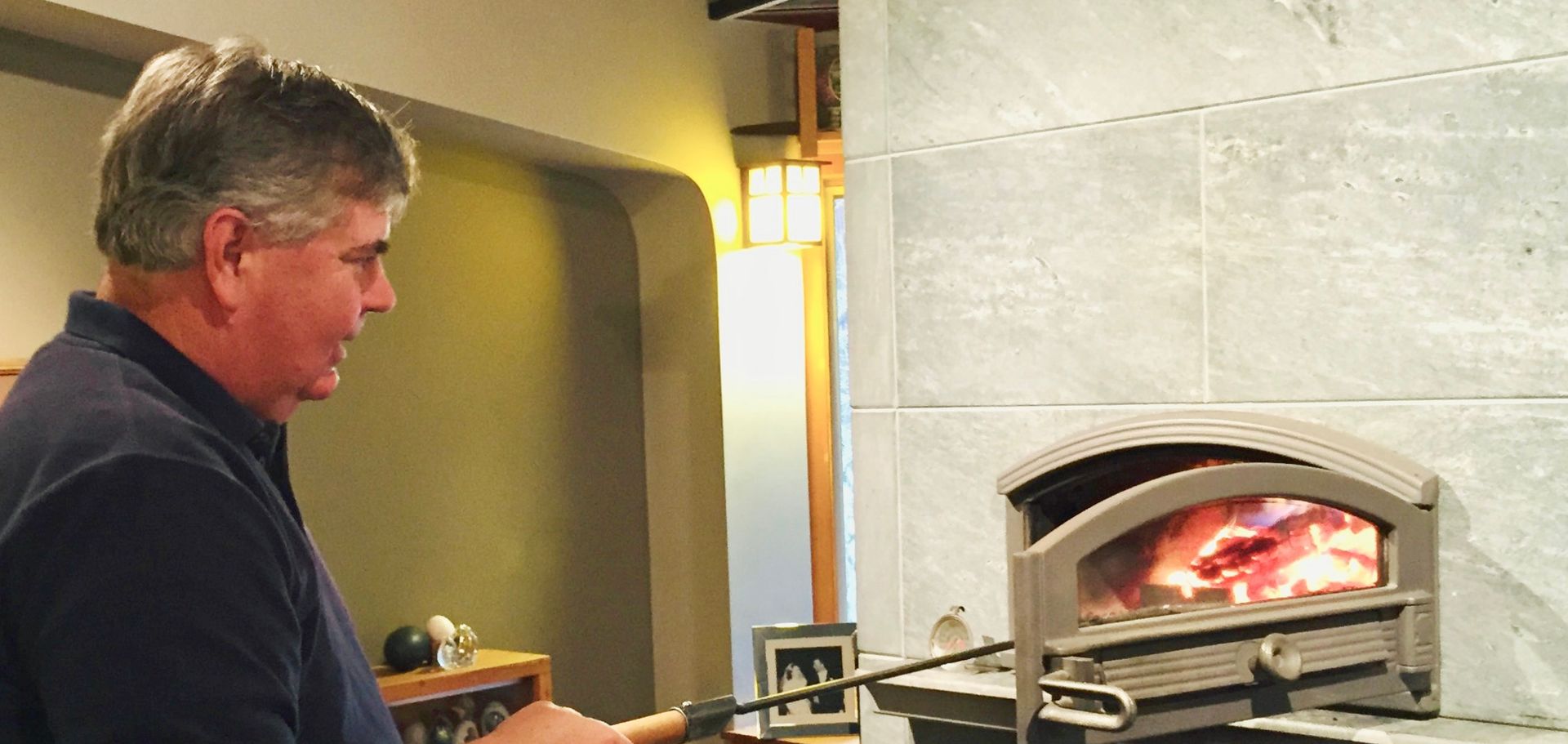
The Haights typically burn about 1-2 cords of wood per winter. Birch is the best wood to burn because of its efficiency, but because they enjoy the crackling sound of the fire, they mostly burn larch, fir, and hemlock.
customer spotlight
Let’s Talk About Wood
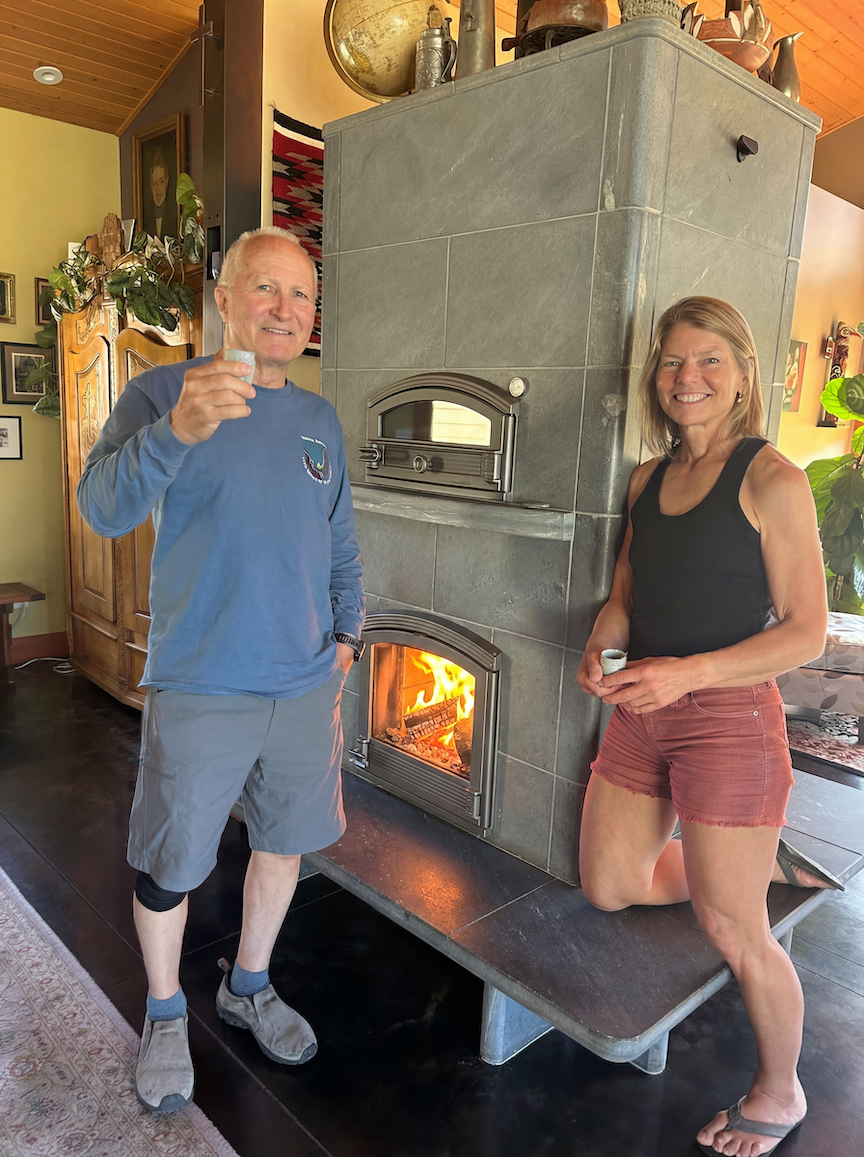
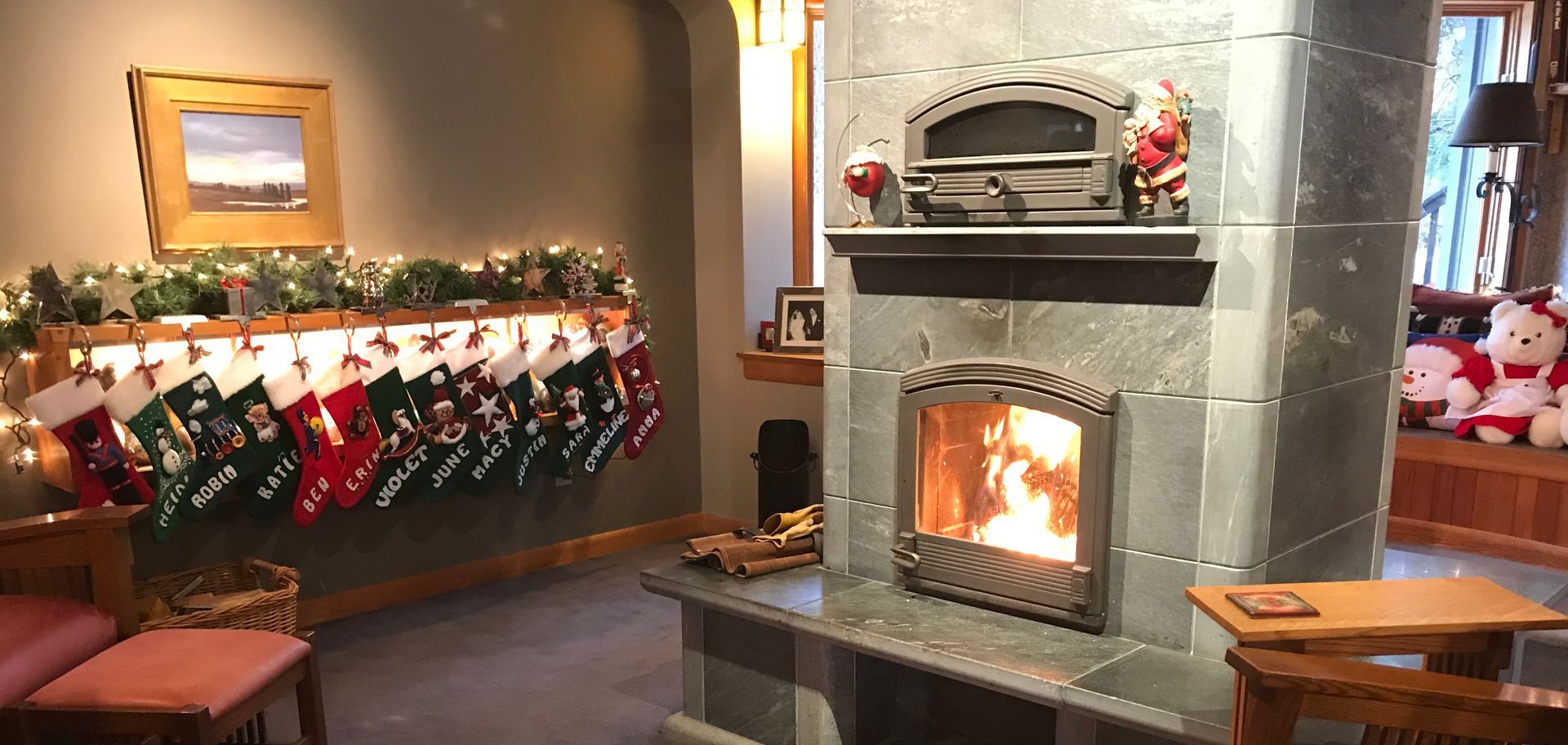
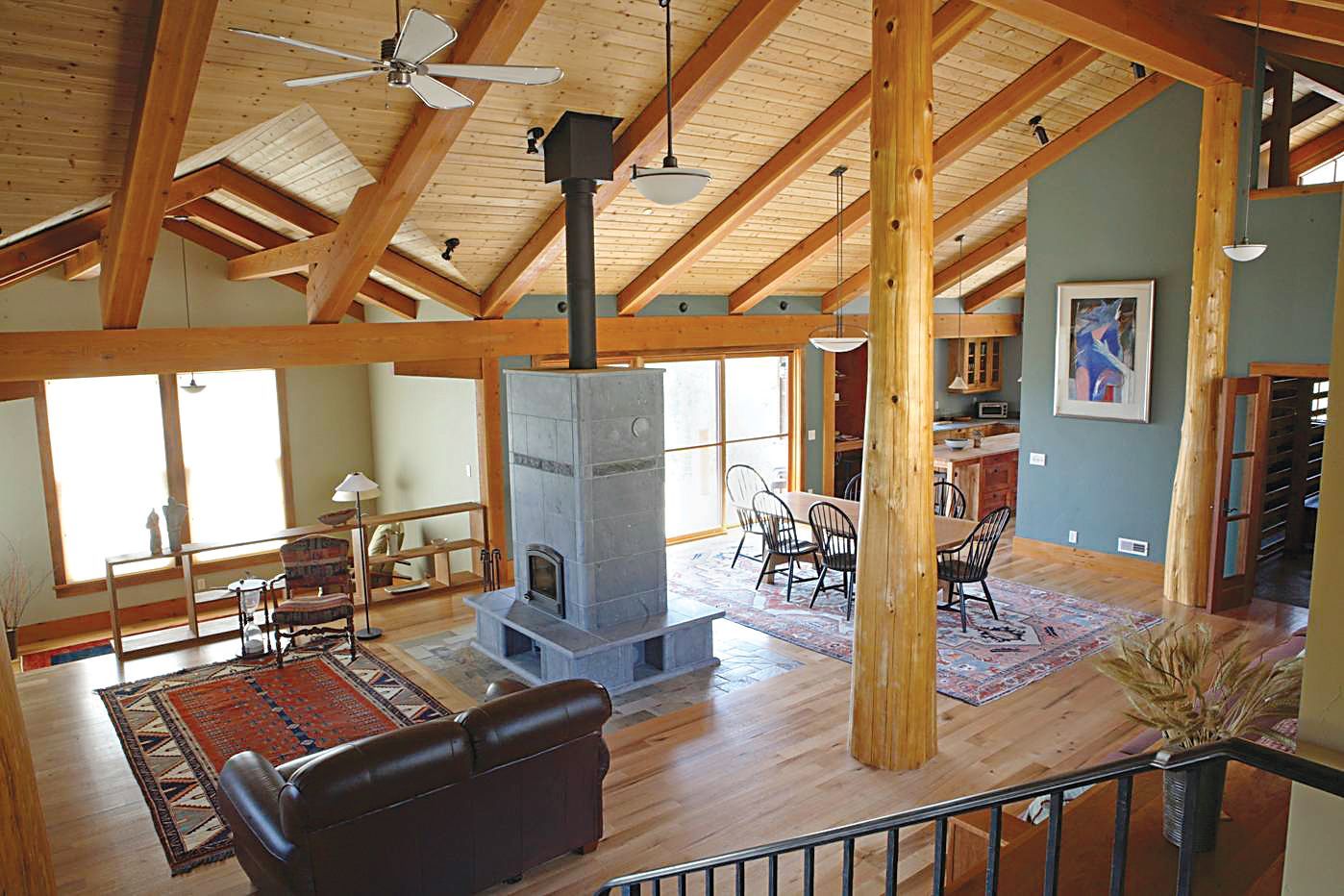
Before writing about cooking in a Tulikivi, let’s talk about wood. Architect Rann Haight said he and his wife Samm burned wood in their masonry heater during most every month of the year. In Idaho, “when it rains in the summer and we need to take the cool edge off, we will burn the Tulikivi with the windows open.” The heater sees regular use from October to May.
The Haights typically burn about 1-2 cords of wood per winter. Birch is the best wood to burn because of its efficiency, but because they enjoy the crackling sound of the fire, they mostly burn larch, fir, and hemlock. Any seasoned wood you have available can be burned in a Tulikivi.
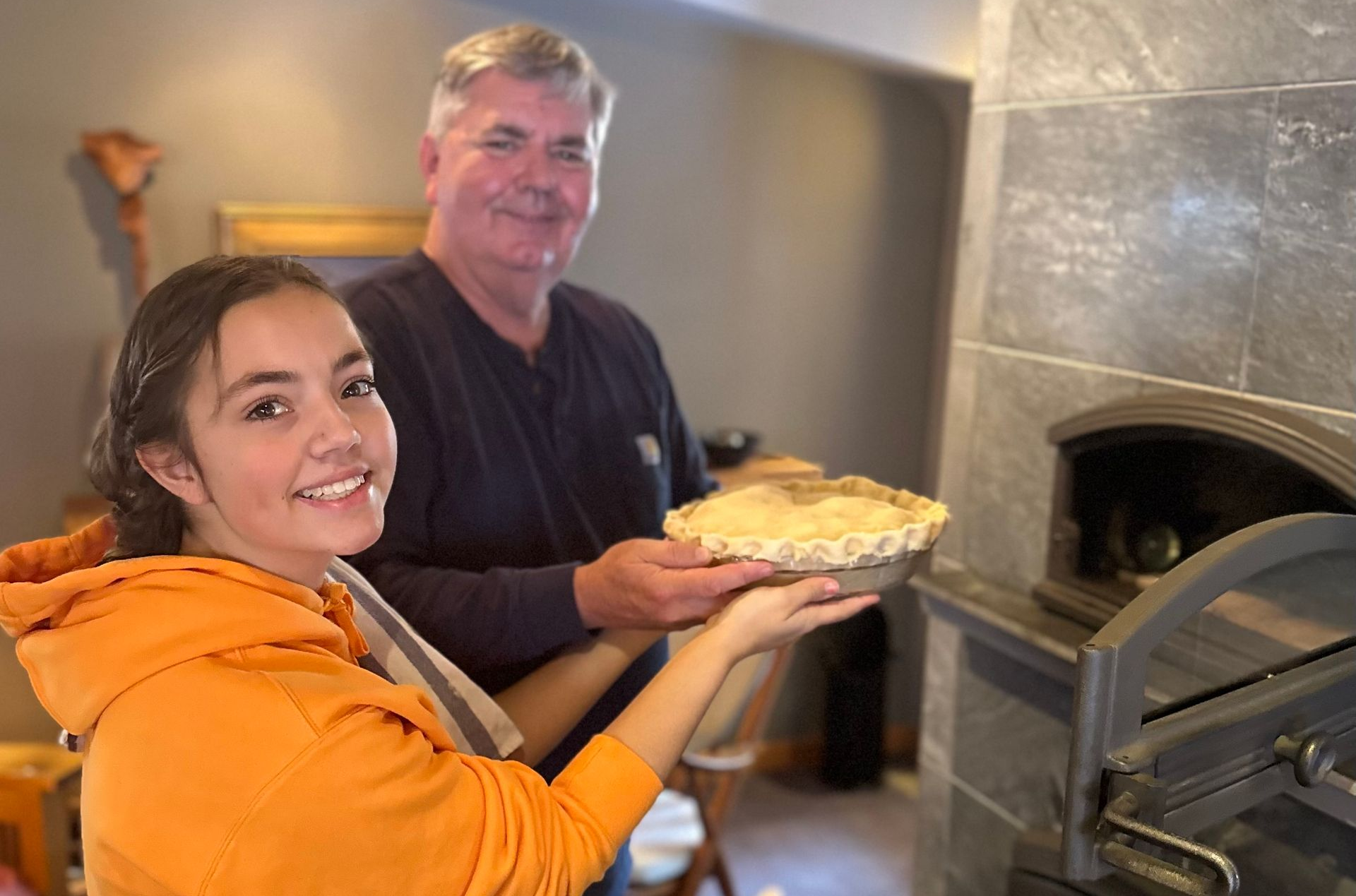
When the Haight’s children were young and Samm worked away from their home, they used the Tulikivi TTU2700-51 bakeoven often. If they were busy at work or with the kids’ activities, it sometimes served as a slow cooker. (Often, the precise temperature of your Tulikivi isn’t critical to a successful bake because of its even heat.) Rann commented, “It was so good to come home to a hot meal with all of the flavors cooked together.” Now, as empty nesters, the Haights cook in the bakeoven about twice a month—it is great for a group, to try fun new recipes in, or to enjoy with special guests. Samm added, “We love our Tulikivi and the wonderful ‘warm’ relationships that have been built through this connection and the atmosphere it provides in our home.”
We hope Rann’s specific bakeoven burning instructions and the family’s recipes below encourage you to reap the benefits of baking and roasting in your bakeoven.
“It took me about a year to learn how to cook in a Tulikivi.” — Rann Haight
Prime Rib Perfection
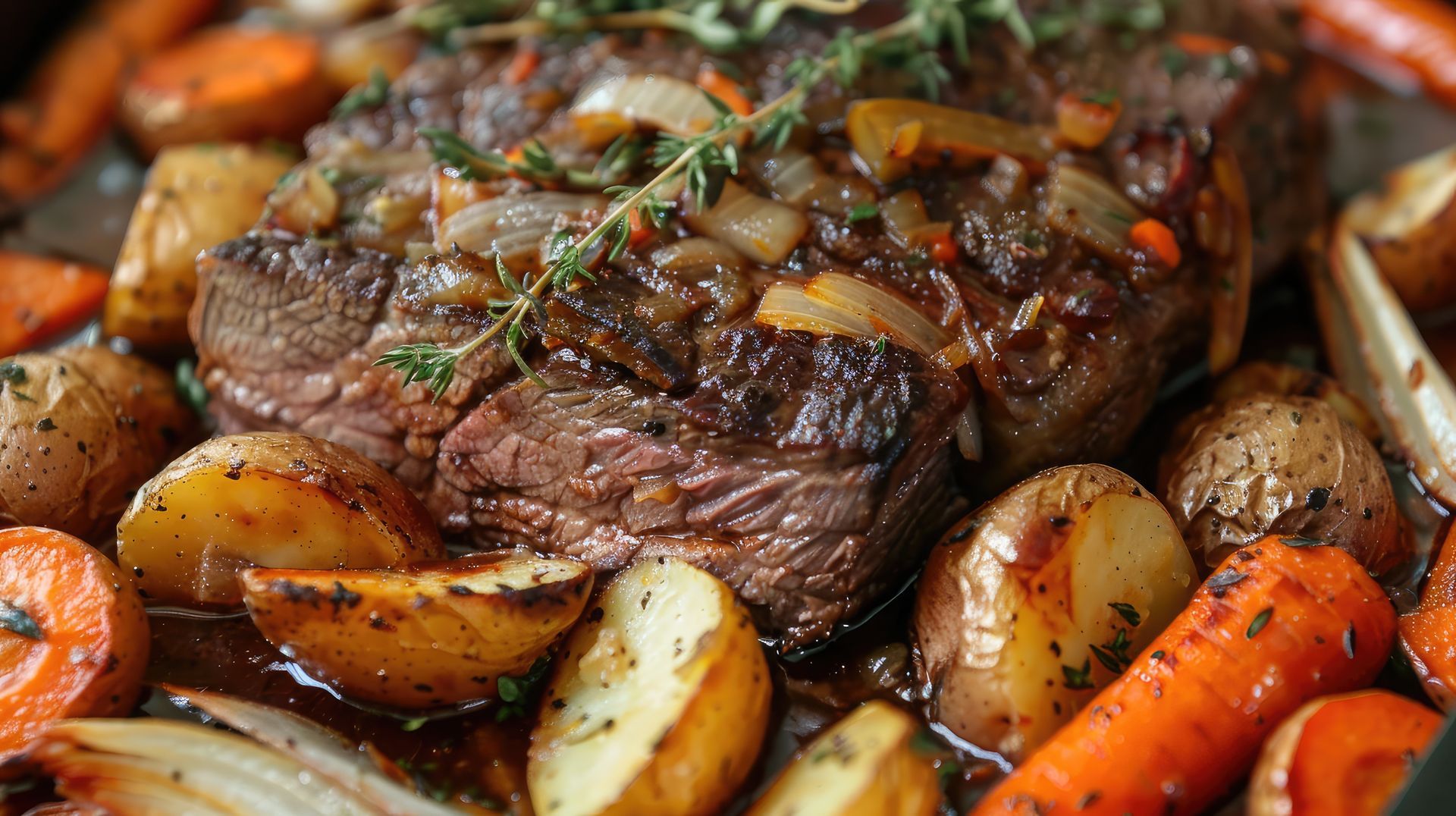
Architect Rann Haight admits, “It took me about a year to learn how to cook in a Tulikivi,” and along the way he perfected a few recipes. For more than twenty years, the Haights have hosted an annual prime rib event for nearly twenty friends and family, featuring a prime rib that Rann slow-roasts in the Tulikivi bakeoven. Here’s his burning process and the recipe:
Start in the morning, burning two loads of wood in the bottom firebox. This gets the entire unit hot to the touch all the way to the top course of soapstone. Next, close off all of the air intakes and transfer what is left of the coals to the bakeoven using a small metal coal shovel. Then load the bakeoven with smaller pieces of firewood. Using the air intake on the bakeoven door, regulate the fire in the bakeoven to a slow burn for the next hour or two adding wood as desired. When the bakeoven fire is down to coals, push the coals to the back using the Tulikivi rake, dropping them into the main firebox, and shut down the air intakes on the bakeoven door.
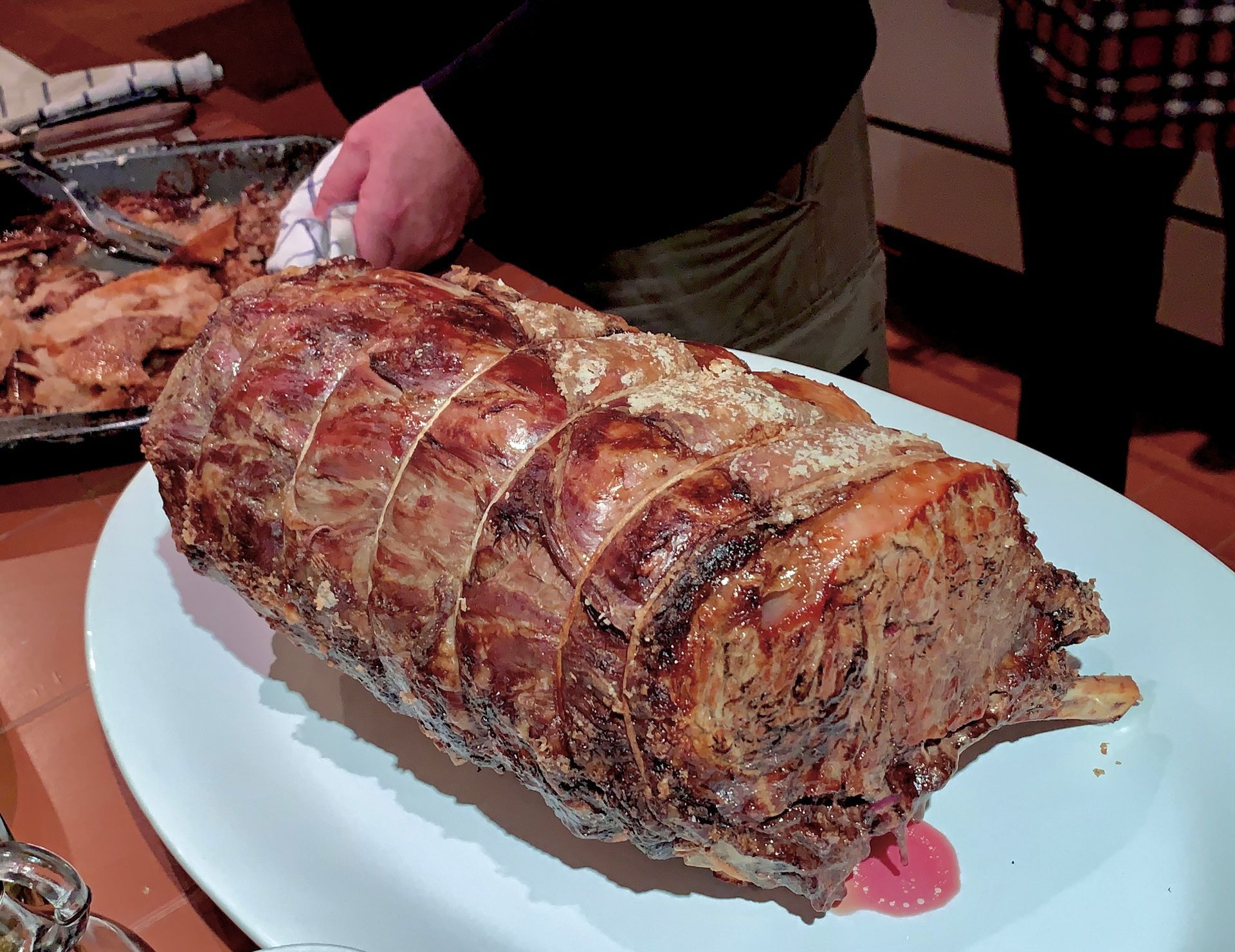
While the heat in the unit is “soaking,” prepare an 11 to 12-pound prime rib roast with ribs cut off but tied back on for baking. Using a 1” to 2” deep, large metal roasting pan (not Pyrex, which will break), lay down a 1/2” deep bed of kosher salt. Place the roast directly on the salt. In a large bowl, using your hands, mix together additional salt adding small amounts of water until it reaches a stiff paste consistency. It should be dry enough to stick to the sides, ends, and top of the roast, encasing the roast as much as possible. Insert the probe of a meat thermometer into the thicker end of the roast.
The bakeoven should be around 600 degrees F. Place the pan in the bakeoven with the thinner end of the roast in the rear of the oven, closing the door. Remove the roast when the temperature reaches 122 degrees F and tent with foil to rest for 30 minutes. This should result with the thinner end being well done and graduating to rare at the thick end, giving something for every taste at the table. Prior to carving, lift off the salt crust like an eggshell as the meat has shrunk.
The bad news: there is no au jus in the pan. The good news: all of the meat juices are still in the roast having been sealed by the crust. I doubt anyone at the table will request au jus, just horseradish.
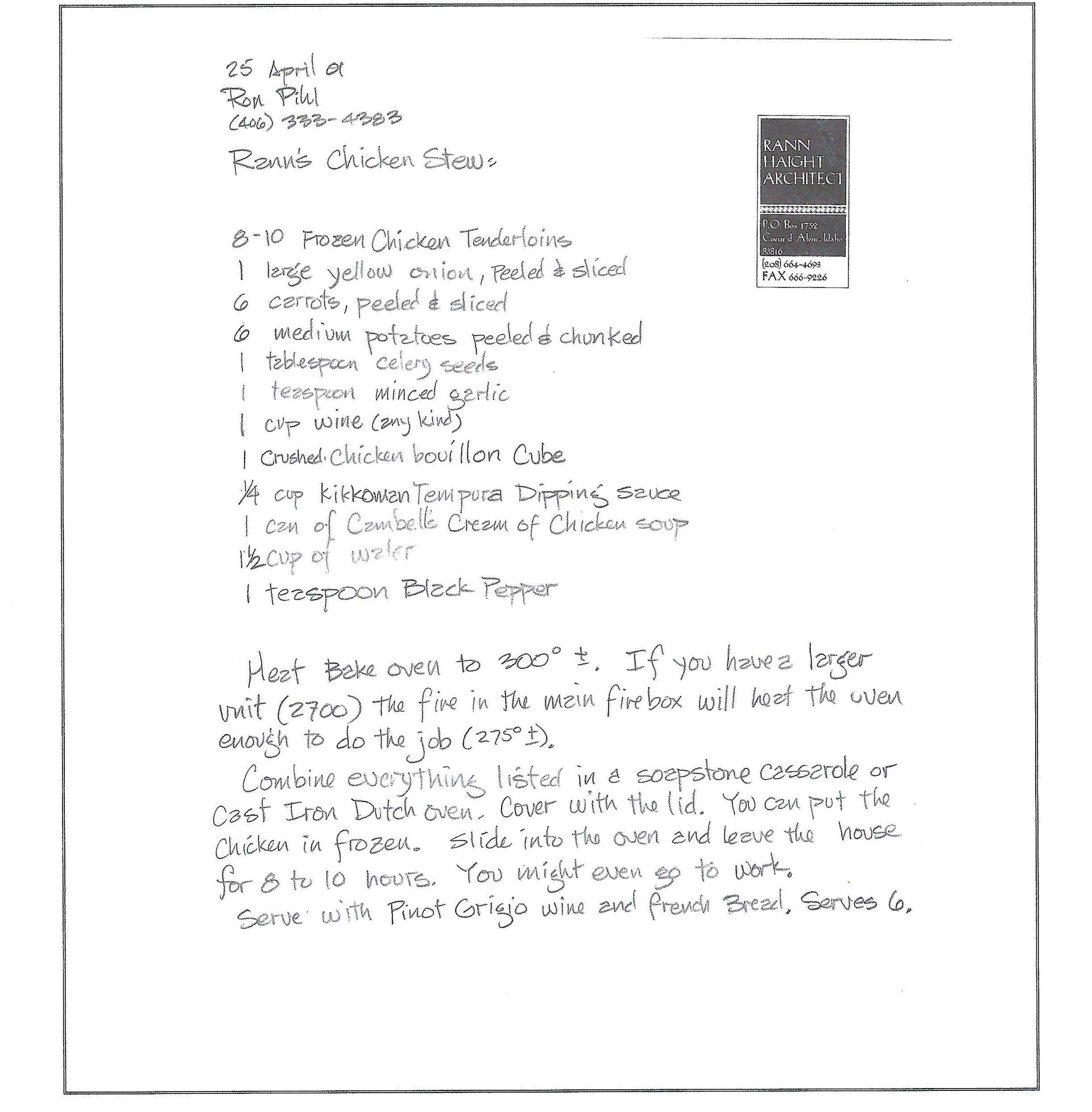
Samm & Rann’s Family Recipes — Rann’s Chicken Stew
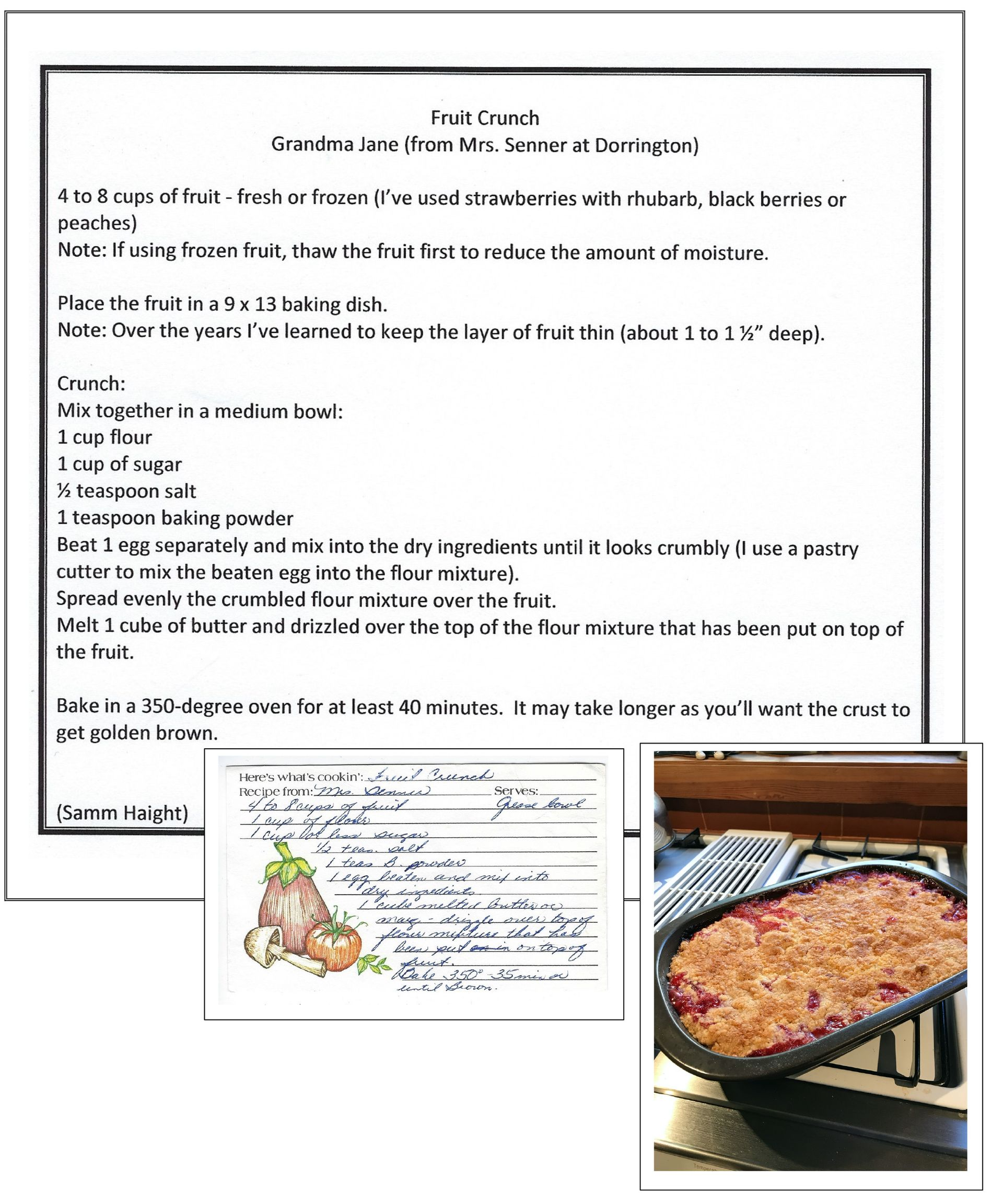
Samm & Rann’s Family Recipes — Samm’s Fruit Crunch
Did you know that you can easily adapt recipes for baking in your Tulikivi? The Haight family’s Fruit Crunch recipe (below) works beautifully in a bakeoven.
Karen Reinhart has published books and articles about the natural and cultural history of Yellowstone National Park and the surrounding area since 1999. She has written articles for Warmstone Fireplaces and Designs since 2001.
Contact Rann Haight if you’re interested in hiring him—his contact information is on his website www.rannhaight.com.